

Key Takeaways
- Buying the wrong blade size is the most common mistake; always check your owner's manual or door jamb sticker.
- Failing to secure the locking tab is a leading cause of blades detaching at highway speed.
- Cleaning the windshield before installing new blades extends their lifespan significantly.
- Not replacing both blades at once creates uneven wiping and streaks on the driver side.
- Forcing the adapter instead of selecting the correct one can crack the blade housing.
Why a simple swap goes wrong
Wiper blade replacement sits near the top of any list of DIY car maintenance tasks. The job takes under ten minutes, requires no tools, and the parts cost little. Yet drivers frequently end up with streaking, chattering, or blades that lift off the glass at speed, all because of small, avoidable errors.
Most mistakes trace back to skipping the preparation steps or assuming every blade fits every vehicle the same way. Wiper systems vary by make, model, and even trim level. Treating the job as truly universal is where things go sideways.
This article focuses on the errors that actually happen and how to prevent each one. For a broader look at routine upkeep that drivers often miss, see annual vehicle maintenance tasks most owners overlook.
Buying the wrong blade size for the vehicle.
Why it happens: Drivers assume one measurement covers the whole car, or they guess based on what looks right in the store.
Skipping the locking tab check after installation.
Why it happens: The tab clicks quietly and the connection feels snug even when the blade is only partially seated.
Installing only one blade instead of replacing both at the same time.
Why it happens: Drivers notice only the streaking blade and replace the one that failed, leaving the other in place.
Letting the wiper arm snap back onto the windshield uncontrolled during installation.
Why it happens: Removing the old blade leaves a spring-loaded arm with no blade to cushion it, and a moment of inattention lets it fall.
Installing the blade without cleaning the windshield first.
Why it happens: Cleaning seems optional since the new blade will wipe the glass anyway.
Forcing an incompatible adapter onto the wiper arm.
Why it happens: The blade packaging includes multiple adapters, and drivers pick one that almost fits rather than identifying the correct arm type.
Getting the fit and installation right
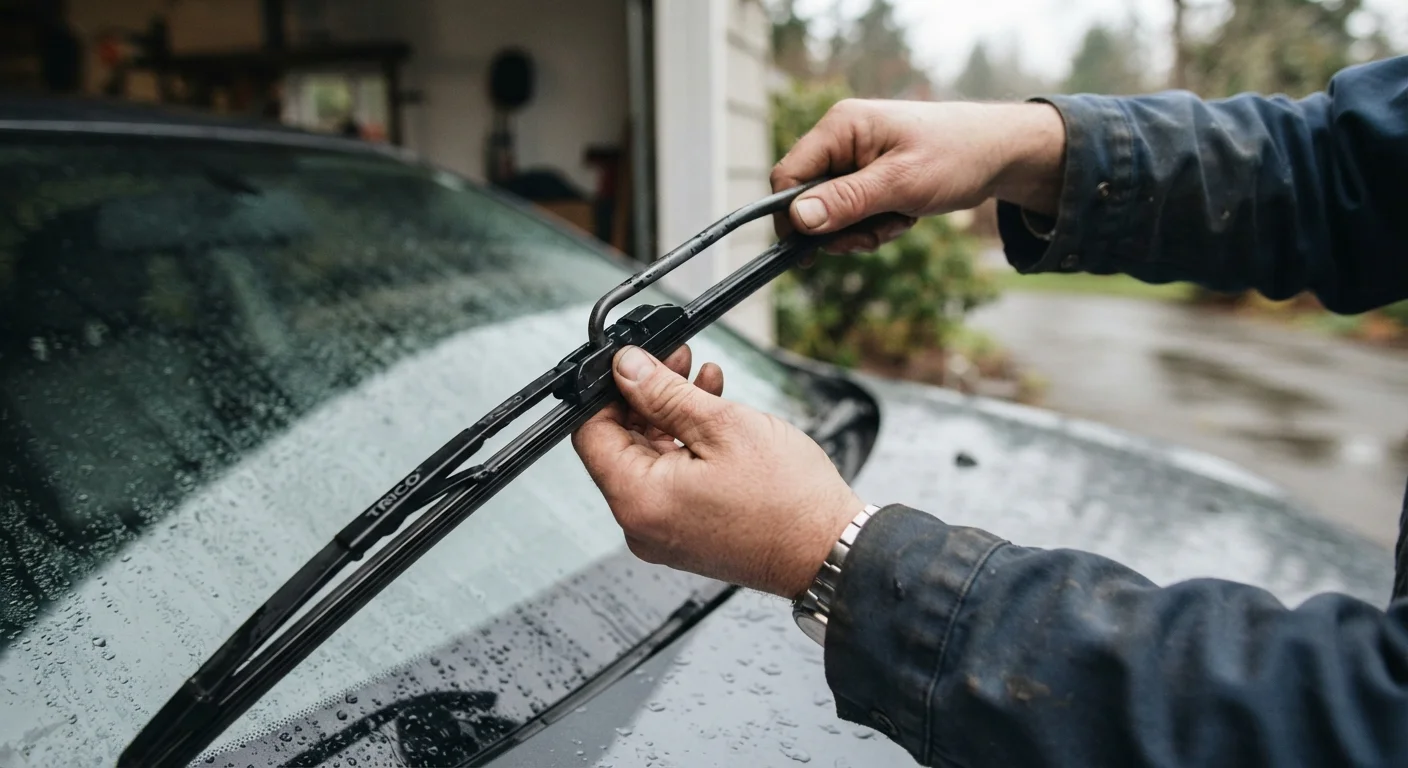
Once you have the correct blade, installation still has failure points. The most consequential is the locking tab. Most hook-style adapters have a small plastic tab that clicks the blade into place. If it does not click, the blade is not seated. At highway speed, wind load on an unsecured blade can flip it off the arm entirely.
Adapter selection matters just as much. Modern blades ship with several plastic adapters in the box to fit different arm styles: J-hook, pinch tab, side pin, and others. Forcing the wrong adapter rather than finding the matching one stresses the blade housing and can crack it within days.
6 months
Typical interval for wiper blade inspection
The Car Care Council recommends inspecting wiper blades at least twice a year, ideally before winter and summer seasons.
Up to 90%
Of driving decisions based on vision
The American Automobile Association (AAA) has noted that a large majority of driving decisions depend on clear visual information, making windshield visibility a direct safety factor.
Windshield condition also affects how new blades perform. Wiper rubber drags across any film, wax residue, or road grime already on the glass, which accelerates wear and causes streaking from the first use. Wiping the windshield with glass cleaner before installing new blades removes that layer.
Finally, wiper maintenance connects to overall visibility and safe driving. Misaligned or worn suspension components that cause vibration will also shorten blade life; for context on how mechanical issues compound, see wheel alignment explained.