

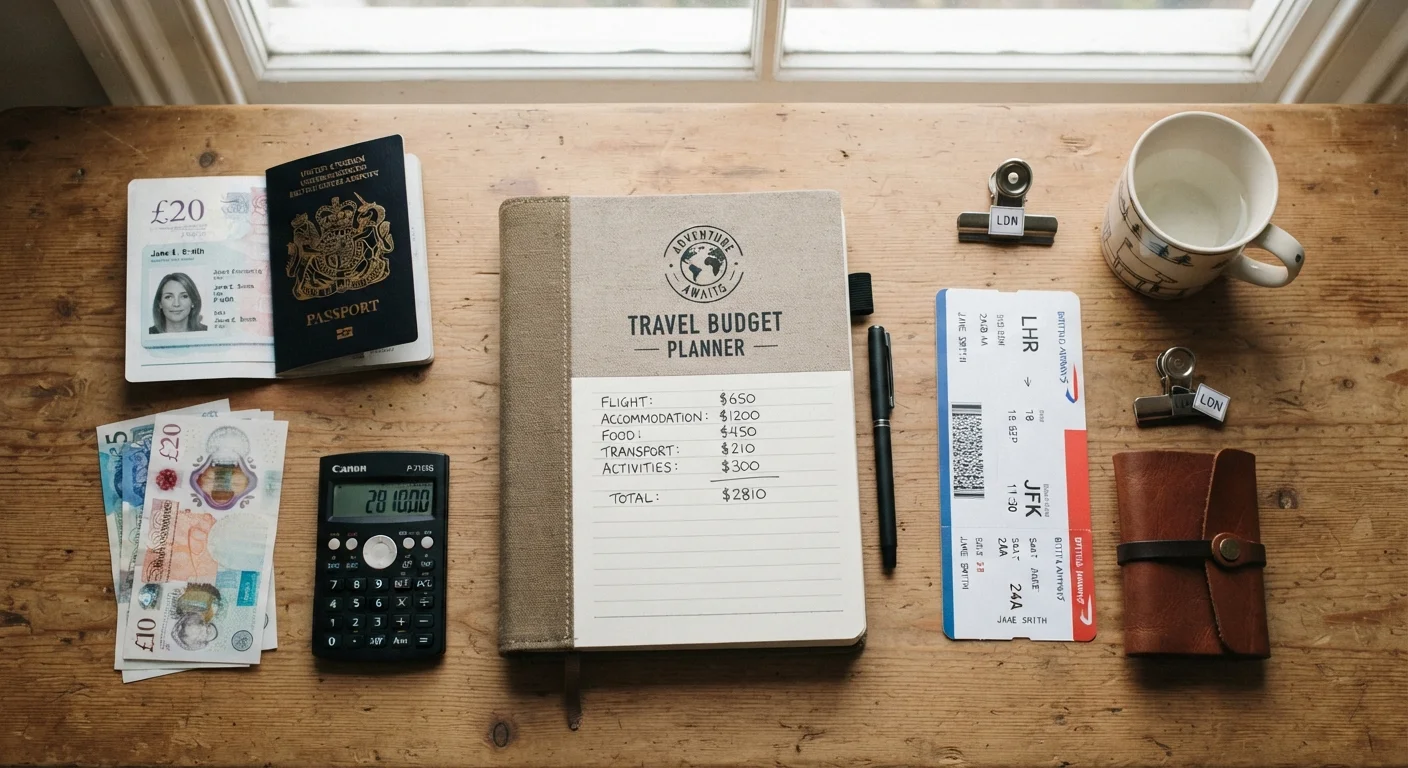
Key Takeaways
- Most travelers undercount daily expenses by forgetting meals, transit, and tips.
- Currency conversion fees and foreign transaction charges can add 3 to 5 percent to total spending.
- A contingency fund of 15 to 20 percent of your total budget helps absorb unexpected costs.
- Booking fees, baggage charges, and resort fees often double the apparent price of a trip.
- Budgeting only for the destination ignores significant costs at home before you leave.
Why travel budgets fail before the trip even starts
Most travel budgets are built around two numbers: the flight and the hotel. That anchoring leaves out a wide range of costs that accumulate quietly and often go unnoticed until a credit card statement arrives. If you have ever returned from a trip wondering where the money went, the issue is usually not overspending at the destination. It is that the original budget was never complete to begin with.
See our guide to building a well-planned trip for a broader look at how to structure your planning from the start. The mistakes below explain where most budgets break down and what to do about each one.
Budgeting only for lodging and airfare while ignoring daily spending.
Why it happens: These are the two largest single charges, so travelers treat them as the whole budget rather than two line items within it.
Overlooking fees that inflate the stated price of flights and hotels.
Why it happens: Advertised prices rarely include baggage fees, seat selection charges, booking platform fees, or hotel resort fees, so the number travelers remember is lower than the number they actually pay.
Ignoring currency conversion costs and foreign transaction fees.
Why it happens: Exchange rates are visible, but the spread charged by banks, airport kiosks, and card networks is less obvious. Travelers assume the posted rate is what they will get.
Forgetting pre-trip and post-trip expenses at home.
Why it happens: Budget planning tends to start at the destination and end when you return, leaving out airport parking, pet boarding, travel vaccinations, visa application fees, and any gear purchases.
Using a single flat estimate instead of accounting for cost variation by day.
Why it happens: Travelers average their spending across the whole trip, but arrival days, excursion days, and departure days typically cost more than routine days in between.
Building a budget that holds up
Once you understand where the gaps tend to appear, fixing them is mostly a matter of process. Start by listing every category of spending, not just the obvious ones. Ground transportation, checked bags, travel insurance, visa fees, and even parking at your home airport belong in the estimate. The categories most people forget in everyday budgeting apply to travel too.
3-5%
Added cost from foreign transaction and conversion fees
Card networks and banks typically charge between 1 and 3 percent per transaction, and currency exchange spreads add further cost on top.
15-20%
Recommended contingency buffer for travel budgets
Financial planners generally suggest reserving 15 to 20 percent of a trip budget for unexpected costs, delays, or price changes.
$50+
Typical daily spending undercount per traveler
Meals, local transit, tips, and entry fees are frequently omitted from initial estimates, often totaling $50 or more per person per day.
After filling in the categories, add a contingency line. A buffer of 15 to 20 percent of your total estimate is a practical starting point for most domestic trips. International travel, especially to destinations with volatile exchange rates or limited ATM access, may warrant more. This is not pessimism about your planning; it is an acknowledgment that some costs cannot be known in advance.
For more context on how financial habits transfer to travel spending, the everyday money tips hub covers practical approaches to tracking and managing variable expenses. The goal is a budget that describes the trip you are actually going to take, not a best-case version of it. For a reality check on the day-by-day costs once you arrive, understanding what a travel day actually costs can help you estimate more accurately.