

| Typical formal nights on a 7-night sailing | 1 to 2 evenings |
| Most common evening dress code | Smart casual |
| Venues where dress codes apply | Main dining rooms and select bars or lounges |
| Venues typically exempt from evening dress codes | Buffets and casual cafes |
| Men's formal night minimum (mainstream lines) | Dark suit with tie |
| Women's formal night minimum (mainstream lines) | Cocktail dress or dressy pantsuit |
What cruise dress codes actually mean
Cruise lines use several standard dress code labels, but each line defines them a little differently. Understanding what the categories mean in practice helps you pack the right clothes without bringing a full wardrobe.
Formal night
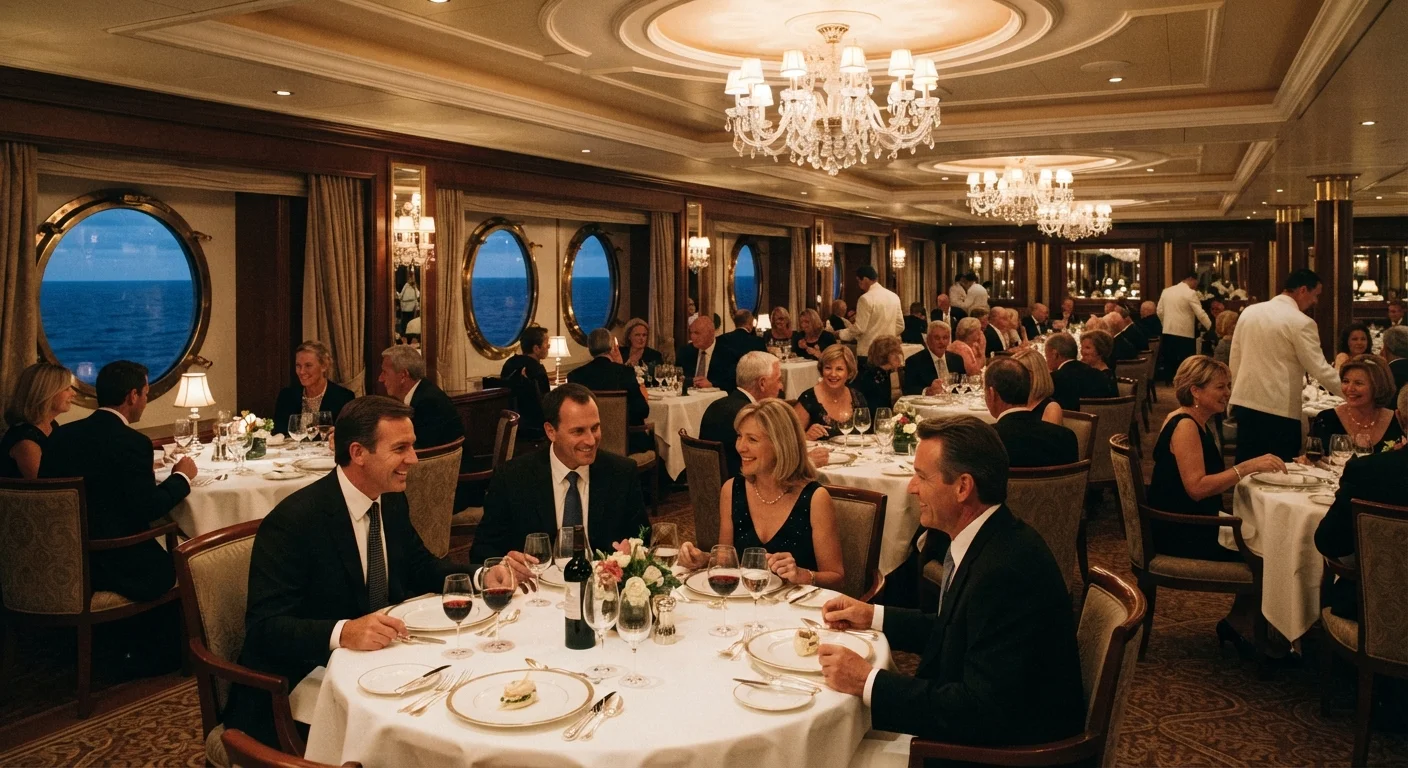
A scheduled evening on a cruise when the main dining room requires elevated attire, typically equivalent to a cocktail dress or dark suit. Most sailings of seven nights or longer include at least one.
Smart casual
A dress standard between casual and formal. Slacks, button-down shirts, blouses, and closed shoes are typically appropriate. Shorts, flip-flops, and athletic wear generally are not.
Elegant casual
A label some cruise lines use in place of formal. It typically means the same level of dress as smart casual, slightly elevated, without a requirement for ties or gowns.
Dress code enforcement
The process by which cruise staff apply attire standards at venue entrances. Enforcement is generally at the dining room door and does not extend to all areas of the ship.
Sea day
A day when the ship is at sea with no port stop. Cruise lines often schedule formal nights on sea days because passengers have more time to prepare.
Casual is the baseline for most daytime hours and informal dining venues. Think resort wear: shorts, sundresses, sandals, or clean jeans. Most cruise days fall into this category, especially on sea days and at port.
Smart casual steps up from casual but does not require a jacket or tie. Slacks or chinos, a button-down or blouse, and closed shoes are generally appropriate. This is the most common evening dress code on mainstream cruise lines.
Formal or formal night is the category that causes the most confusion. On most mainstream lines, formal nights typically occur once or twice per sailing on voyages of seven nights or longer. The expectation ranges from a dark suit and tie to a tuxedo for men, and a cocktail dress, evening gown, or dressy pantsuit for women. Some lines call this category "elegant" or "dressy." The label differs, but the intent is the same: attire you might wear to a wedding or an upscale dinner party.
Luxury and expedition lines handle dress codes differently from mainstream carriers. Ultra-luxury lines often relax formal requirements entirely, while expedition ships focused on remote itineraries generally lean toward functional, casual clothing throughout. Check your specific line's policy before packing.
How many formal nights to expect
| Typical formal nights on a 7-night sailing | 1 to 2 evenings |
| Most common evening dress code | Smart casual |
| Venues where dress codes apply | Main dining rooms and select bars or lounges |
| Venues typically exempt from evening dress codes | Buffets and casual cafes |
| Men's formal night minimum (mainstream lines) | Dark suit with tie |
| Women's formal night minimum (mainstream lines) | Cocktail dress or dressy pantsuit |
The number of formal nights on a sailing generally tracks with cruise length. A three- or four-night cruise may have no formal night at all, or just one. A seven-night sailing typically has one to two. Voyages of ten nights or longer can have three or more.
Formal nights are usually scheduled on sea days rather than port days, when passengers have more time to dress up. Your daily program, delivered to your cabin the evening before, will note when a formal night is scheduled. Lines also publish this information in their cruise documents and apps in advance, so you can plan before you board.
If you are traveling with children, most lines apply the same dress code to kids but interpret it more leniently. A collared shirt and dress pants is typically acceptable for boys; a dress or dressy outfit for girls. See our family cruising guide for more on how dining and dress expectations work when kids are in the group.
Packing for formal nights without overpacking
The challenge for most cruisers is not knowing what to wear; it is bringing the right clothes without filling an extra bag. A few strategies help.
- Men traveling on a mainstream line can cover smart casual and formal nights with one dark suit, a tie, and a dress shirt. A tuxedo is rarely necessary unless the passenger prefers one.
- Women have more flexibility. A cocktail dress or a dressier separates outfit can work across multiple formal nights. Packing one versatile piece and adding accessories is more efficient than packing two full outfits.
- Shoes add weight quickly. One pair of dressier shoes worn for both smart casual and formal evenings is a practical compromise.
- Wrinkle-resistant fabrics help when clothing is packed for several days before use. A travel steamer or asking your cabin steward about pressing services can rescue a wrinkled garment.
For a broader look at what first-time cruisers often underpack or overpack, see our cruise packing guide. Clothing for dress-code nights is one of the more common sources of overpacking on shorter sailings.
If formal nights do not appeal to you, many ships have at least one alternative dining venue, often the buffet, that maintains a more relaxed dress standard even on formal evenings. Passengers who prefer not to dress up can eat there without issue.
Dress code enforcement and what to expect
Enforcement varies by line and venue. Mainstream lines generally ask guests who arrive at the main dining room in clearly casual attire on formal night to return to their cabin to change, or to dine elsewhere that evening. The dress code applies to dining rooms and certain bars or lounges, not to the entire ship.
Pool decks, buffets, and casual cafes retain their own relaxed standards regardless of what evening it is. Wet swimwear and bare feet are typically restricted to pool areas throughout the sailing, formal night or not.
Luxury lines with all-inclusive pricing often integrate dress code flexibility as part of their overall product. Some have moved away from formal nights entirely. If formal evenings matter to you (either because you enjoy them or because you want to avoid them), confirm the specific policy before booking.
Dining venue selection also affects how dress codes apply to your trip. Our cruise dining guide explains how specialty restaurants, main dining rooms, and buffets each operate and what dress standards to expect in each setting.
Dress code policies are set by individual cruise lines and can change. Confirm current requirements directly with your cruise line before departure.