

Key Takeaways
- Color temperature is measured in Kelvins; lower numbers are warmer and amber, higher numbers are cooler and blue-white.
- Warm light (2700K to 3000K) suits relaxation spaces like bedrooms and living rooms.
- Neutral to cool light (3500K to 5000K) works well for task-heavy areas like kitchens, home offices, and workshops.
- Mixing very different color temperatures in one open space can make the room feel visually inconsistent.
- Color temperature affects mood and can influence how alert or relaxed a person feels in a room.
Color temperature
Color temperature describes the apparent warmth or coolness of light, measured in units called Kelvins (K). Lower Kelvin numbers (roughly 2700K to 3000K) produce a warm, amber-toned light. Higher numbers (5000K and above) produce a cool, blue-white light that mimics daylight. The number comes from the color a theoretical black object would glow at a given physical temperature.
Color temperature is a property of the light source itself, not the color of walls or objects in the room. It is separate from Color Rendering Index (CRI), which measures how accurately a bulb reveals the true colors of surfaces it illuminates.
What the Kelvin scale actually measures
When lighting manufacturers label a bulb "warm white" or "daylight," they are describing its color temperature in Kelvins. The scale is counterintuitive at first: a candle flame sits around 1800K, a standard warm LED around 2700K, and outdoor midday sun around 5500K to 6500K. The cooler the light looks to the eye, the higher the Kelvin number.
Most residential bulbs fall between 2700K and 5000K. That range covers four noticeably different appearances:
- 2700K to 3000K: warm white, yellow-orange cast, similar to incandescent or halogen light
- 3000K to 3500K: soft white, a slight yellow tone that reads as neutral in most rooms
- 3500K to 4100K: cool white, a clean, crisp look with minimal yellow
- 5000K and above: daylight, a blue-white tone that feels clinical or energizing depending on context
These categories are not standardized across every manufacturer, so reading the specific Kelvin value on the packaging is more reliable than reading the label alone.
Check the packaging, not just the label
Terms like "warm white," "soft white," and "bright white" are not defined by a single industry standard. Two bulbs with the same label can differ by several hundred Kelvins. Always check the numeric Kelvin rating printed on the box before buying.
How color temperature affects the feel of a room
Warm light makes surfaces appear richer in reds and yellows. Wood tones deepen, skin tones look flattering, and the overall atmosphere reads as relaxed. That is why warm bulbs have long been the default for living rooms, dining rooms, and bedrooms.
Cool light increases perceived contrast and makes whites appear crisper. It is easier to spot fine detail under cooler light, which is why garages, laundry rooms, and craft spaces often benefit from it. The trade-off is that cool light in a lounge or bedroom can feel harsh and uninviting.
2700K
Typical warm white LED rating
Most residential warm-white LEDs are rated between 2700K and 3000K, the range closest to traditional incandescent light.
5500K to 6500K
Approximate color temperature of midday sunlight
Outdoor daylight at noon typically falls in this range, which is why "daylight" bulbs at 5000K+ are used to approximate natural working light indoors.
Color temperature also intersects with the color of your walls and furnishings. A warm bulb in a room painted deep blue will neutralize some of that blue, pulling the wall color toward grey-green. A cool bulb in a cream room can make the cream look faintly yellow or washed out. Testing a bulb in the actual room, rather than judging it in a hardware store, gives a more accurate picture.
Room-by-room guidance
There is no single correct temperature for every space. The right choice depends on how the room is used and what atmosphere you want.
Bedrooms and living rooms
Most people find 2700K to 3000K comfortable for winding down. The warmth signals the body to relax. If a bedroom also serves as a reading or work area, a lamp with an adjustable color temperature gives you flexibility across different activities.
Kitchens
Kitchens balance task work (chopping, reading recipes, checking food doneness) with social time. A range of 3000K to 4000K is a reasonable middle ground. Task lighting under cabinets can run slightly cooler than ambient ceiling fixtures without creating a jarring contrast.
Bathrooms
Vanity lighting for grooming is a case where accuracy matters. Around 3000K to 3500K tends to render skin tones naturally without the unflattering blue cast that daylight bulbs can produce. Avoid very warm bulbs here because they can obscure subtle color differences, making tasks like applying makeup less precise.
Home offices and workshops
Sustained focus and close-detail work are easier under neutral to cool light. The 4000K to 5000K range is a common choice. That said, very cool light (above 5000K) can feel fatiguing over long periods for some people, so personal comfort matters.
Open-plan spaces
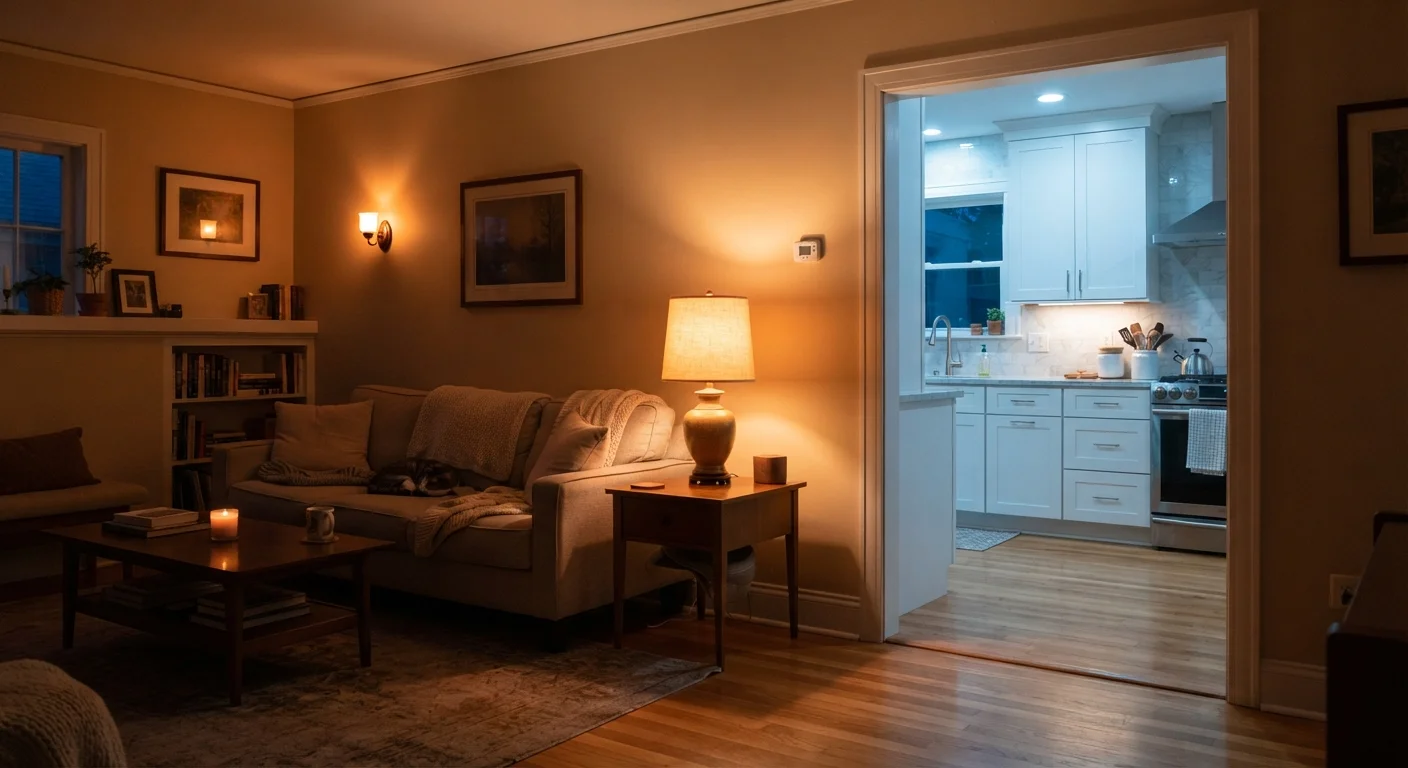
In a combined kitchen and living area, aim to keep color temperatures within about 1000K of each other. A 2700K sofa lamp paired with a 5000K pendant over the island will look disjointed even if each bulb is appropriate in isolation.
Dimming, smart bulbs, and mixed sources
Many LED bulbs shift warmer as they dim, similar to how incandescent bulbs behaved. This behavior, sometimes called "warm dimming," means a bulb rated at 2700K at full brightness may approach 2200K at 10 percent output. That shift reinforces the relaxing quality of dimmed light in the evening.
Smart bulbs that allow you to adjust color temperature through an app or switch are genuinely useful in multi-purpose rooms. They let you set a cool temperature for morning routines and then dial back to warm in the evening without changing the fixture.
Natural light changes color temperature throughout the day, and artificial lighting in the same room will interact with it. A room that looks balanced at noon may feel too cool at dusk when the window light turns orange. Layering light sources (ceiling fixtures, floor lamps, task lamps) gives you more control than relying on a single source.