

Key Takeaways
- Epoxy bonds concrete back together with compressive strength that can exceed the original material.
- Polyurethane expands on contact with moisture, making it suited for wet or leaking cracks.
- A crack that still moves requires a flexible filler; epoxy is too rigid and will re-crack.
- Neither material should be applied to actively moving structural cracks without professional assessment.
- Surface preparation matters more than product choice: dirty or wet surfaces cause both materials to fail.
Option A
Epoxy
The rigid, high-strength option for structural restoration.
Best for: Cracks in load-bearing concrete where restoring structural integrity is the goal.
Option B
Polyurethane
The flexible, water-tolerant option for sealing and waterproofing.
Best for: Non-structural cracks where moisture intrusion or movement is the primary concern.
If the crack is in a load-bearing wall, beam, or slab and the concrete has stopped moving
Epoxy
Epoxy restores compressive and tensile strength across the crack plane, which polyurethane cannot do.
If the crack is leaking water or is in a basement wall subject to seasonal movement
Polyurethane
Polyurethane expands to fill voids and tolerates minor movement without de-bonding or cracking again.
If you are unsure whether the crack is structural or still active
Neither, consult a professional
Applying the wrong filler to an active structural crack can mask a serious problem without fixing it.
What each material actually does
Epoxy injection fills a crack with a two-part adhesive that cures into a solid mass. Once cured, the repaired zone is typically stronger in compression than the surrounding concrete, with compressive strengths often cited above 10,000 psi. The bond is rigid; the repaired crack will not flex.
Polyurethane foam or gel works differently. When it contacts moisture (including humidity inside the crack), it expands and cures into a semi-flexible or flexible plug. It does not restore load-carrying capacity, but it stops water movement and accommodates small amounts of joint movement without failing. Some polyurethane formulations are designed specifically for wet or actively leaking cracks, where epoxy would simply not cure properly.
Structural vs. cosmetic: know the difference
The distinction between structural and cosmetic is not always obvious from appearance alone. A hairline crack in a basement floor may be cosmetic; the same width crack in a retaining wall or post-tension slab may not be. When in doubt, have a licensed structural engineer or contractor assess the crack before any repair.
The distinction between structural and cosmetic is not always obvious from appearance alone. A hairline crack in a basement floor may be cosmetic; the same width crack in a retaining wall or post-tension slab may not be. When in doubt, have a licensed structural engineer or contractor assess the crack before any repair.
When to use epoxy
Epoxy suits dry, dormant cracks in structural concrete: foundation walls that have stabilized, garage slabs after settlement has stopped, or columns and beams where load transfer across the crack matters. The surface must be dry; most epoxy systems require moisture content below 6 percent, though some moisture-tolerant formulations extend that range modestly.
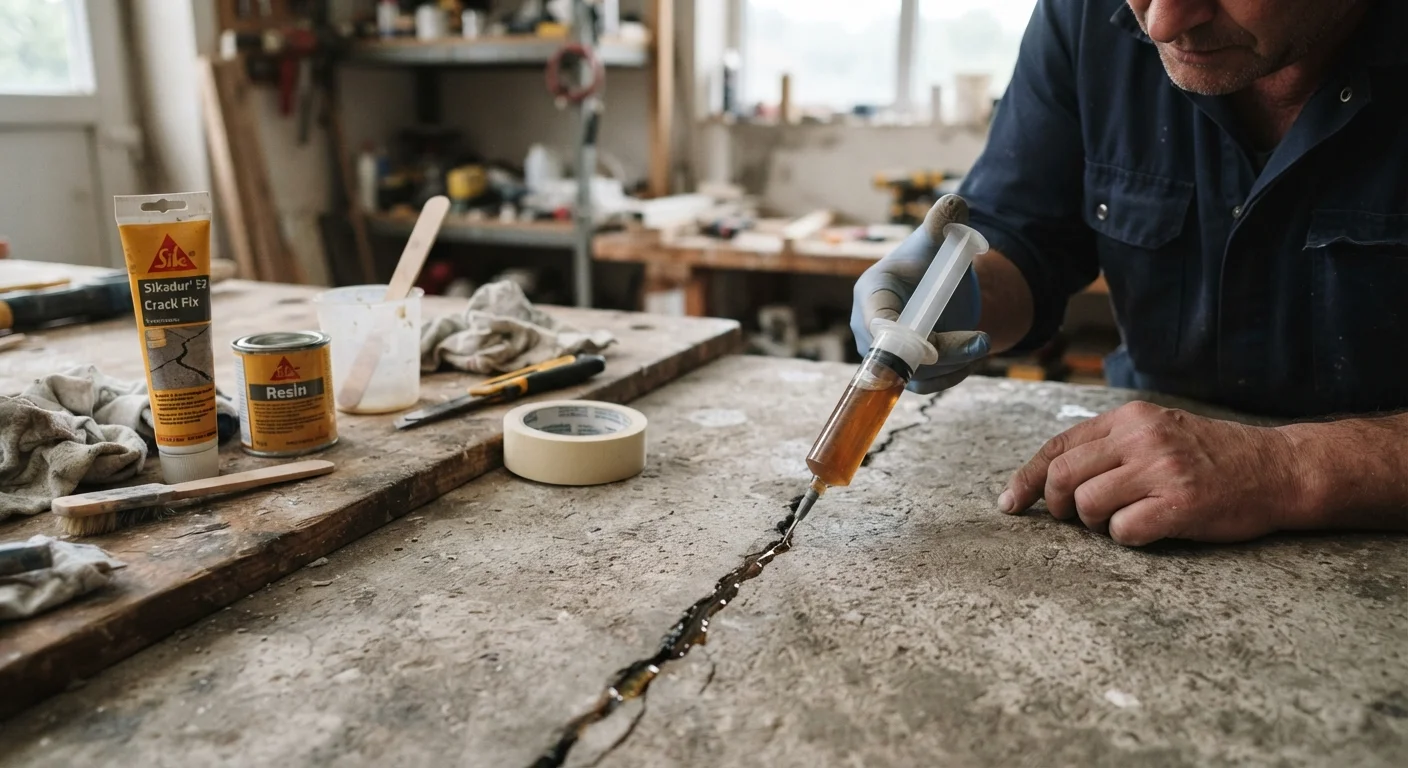
Application typically involves injecting low-viscosity epoxy under pressure through ports spaced along the crack. This is DIY-feasible for accessible, shallow cracks, but pressure injection in thick walls often calls for a contractor with the right equipment. The material takes 24 to 72 hours to reach full cure depending on temperature, and cold conditions (below about 40 degrees F) slow or prevent curing.
| Criterion | Epoxy | Polyurethane |
|---|---|---|
| Primary purpose | Structural bond restoration | Sealing and waterproofing |
| Flexibility after cure | Rigid | Semi-flexible to flexible |
| Works on wet cracks | No (most formulations) | Yes (hydrophilic types) |
| Compressive strength | Very high (10,000+ psi typical) | Low; not load-bearing |
| Cure time | 24 to 72 hours | 30 minutes to 1 hour |
| Tolerates crack movement | No; will re-crack | Yes, within limits |
| DIY accessibility | Moderate; pressure injection can be complex | Easier for surface and gravity fills |
When to use polyurethane
Polyurethane is the practical choice for basement walls with active seepage, cracks near grade where moisture is constant, or any repair where the concrete is known to shift slightly with temperature or soil pressure. Because it expands, it fills irregular voids that a lower-viscosity epoxy might not fully penetrate.
For a leaking crack, a two-part hydrophilic (water-attracting) polyurethane foam can be injected directly into wet concrete. The foam reacts with the water already present and swells to seal the passage. The repair will not add structural strength, so if the wall also has structural concerns, that is a separate problem requiring separate assessment.
Polyurethane cures faster than epoxy in most cases, often within an hour, which is useful when work time is limited. It is also generally more tolerant of imperfect surface prep, though clean surfaces still produce better bonds.
Shared limitations both materials have
Neither material fixes the underlying cause of a crack. If soil pressure, tree roots, freeze-thaw cycling, or settlement created the crack, the same force will create new ones unless the root cause is addressed. A repair that looks complete can fail within a season if conditions have not changed.
Surface contamination (oil, curing compounds, dust, standing water with epoxy) prevents adhesion for both products. Grinding or vacuuming the crack before injection is not optional. For exterior horizontal slabs, some contractors recommend routing the crack to a uniform width before filling, which gives either material a consistent seat and reduces the chance of disbonding under traffic.
Permits are generally not required for cosmetic crack repair, but structural concrete repair in regulated occupancies (commercial buildings, multi-family housing) may involve inspection requirements. Check with your local building department before work on anything beyond a residential garage slab or basement floor.