

Key Takeaways
- Research links time in natural settings to lower cortisol levels and reduced self-reported stress.
- Effects appear dose-dependent: even 20 minutes outdoors can produce measurable mood changes.
- Evidence is stronger for stress reduction than for conditions like depression or anxiety disorders.
- Access, weather, and mobility constraints limit how reliably most people can use nature exposure.
- Outdoor time works best as a complement to other wellness habits, not a standalone treatment.
Consistent cortisol reduction in controlled studies
Multiple physiological studies, including the shinrin-yoku research from Japan, find measurable drops in salivary cortisol after 20 to 30 minutes in natural settings compared with urban environments.
Improved mood with minimal time investment
A 2019 Frontiers in Psychology study found that even brief nature contact produced significant self-reported mood improvements, with the largest per-minute gains in the first 20 to 30 minutes.
Restored attention and reduced mental fatigue
Attention Restoration Theory is backed by several controlled studies showing better performance on concentration tasks after time in natural versus built environments.
Population-level associations with lower psychological distress
Large cohort studies in the UK and Europe link greater access to green space with lower rates of self-reported distress, holding across income levels and controlling for physical activity.
Low cost and accessible for most people
Urban parks, tree-lined paths, and waterfronts all show measurable effects in studies, meaning expensive travel or remote wilderness is not required to see benefit.
Small samples and limited active controls
Many experimental studies have fewer than 100 participants and do not isolate nature exposure from the effects of movement, screen breaks, or simply leaving a stressful environment.
Expectation bias inflates self-reported outcomes
Participants who expect outdoor time to help them consistently report that it does. Studies relying solely on self-report without physiological measures are harder to interpret.
Weak evidence for clinical mood disorders
The research base for everyday stress reduction is more robust than for treating diagnosed depression or anxiety disorders, which require clinical evaluation and evidence-based treatment.
Access is unequal across geography and income
Many influential studies were conducted in green-rich environments in Japan, Scandinavia, or the UK. Results may not transfer directly to people in dense urban areas with limited park access.
Seasonal and weather constraints reduce consistency
Cold winters, extreme heat, or persistent rain make outdoor habits difficult to sustain year-round, which affects whether the habit can deliver cumulative benefit over time.
Mobility and safety barriers for some populations
Older adults, people with physical disabilities, and those in areas with limited safe outdoor spaces may not be able to access the conditions most studies used.
Our Verdict
The evidence for outdoor time improving everyday mood and reducing stress is reasonably consistent, though most studies are small and rely on self-reported outcomes. For everyday mental wellbeing, regular nature exposure is a low-risk, accessible habit worth building in. It is not a substitute for professional care when a diagnosable condition is present.
People managing everyday stress, low mood, or mental fatigue who want a well-supported, practical habit to add alongside other wellness strategies.
What the research actually measures
Studies on nature and mental health typically measure one of three things: self-reported mood and stress, physiological markers such as cortisol or heart rate variability, or attention and cognitive performance. These are not the same thing, and conflating them overstates what any single study shows.
Physiological work, often grouped under the label of 'restorative environments research,' consistently finds that time in green or blue spaces (parks, forests, coastlines) correlates with lower cortisol and reduced autonomic arousal compared with urban environments. A frequently cited body of work from Japanese shinrin-yoku (forest bathing) studies found lower salivary cortisol and reduced sympathetic nervous system activity after forest walks versus city walks. The effect sizes are real, though modest.
Attention research, drawing on Attention Restoration Theory developed by Rachel and Stephen Kaplan, suggests that natural environments restore directed-attention capacity more efficiently than built environments. Several controlled studies support this, particularly for tasks requiring sustained concentration.
Self-reported mood and stress improvements are the most common outcome in the literature and also the most subject to expectation bias. People who believe outdoor time will help them tend to report that it does. Well-controlled trials are fewer than the volume of published studies might suggest.
What the evidence supports
Consistent cortisol reduction in controlled studies
Multiple physiological studies, including the shinrin-yoku research from Japan, find measurable drops in salivary cortisol after 20 to 30 minutes in natural settings compared with urban environments.
Improved mood with minimal time investment
A 2019 Frontiers in Psychology study found that even brief nature contact produced significant self-reported mood improvements, with the largest per-minute gains in the first 20 to 30 minutes.
Restored attention and reduced mental fatigue
Attention Restoration Theory is backed by several controlled studies showing better performance on concentration tasks after time in natural versus built environments.
Population-level associations with lower psychological distress
Large cohort studies in the UK and Europe link greater access to green space with lower rates of self-reported distress, holding across income levels and controlling for physical activity.
Low cost and accessible for most people
Urban parks, tree-lined paths, and waterfronts all show measurable effects in studies, meaning expensive travel or remote wilderness is not required to see benefit.
The strongest signals in the literature cluster around three areas. First, acute stress reduction: short exposures (20 to 30 minutes in a natural setting) produce consistent decreases in self-reported stress and, in many studies, in cortisol. Second, improved mood and reduced mental fatigue over the course of a day. Third, better attentional performance on cognitive tasks following time in natural settings.
A 2019 study published in Frontiers in Psychology found that 20 to 30 minutes of contact with nature, defined as anywhere that made participants feel they were interacting with the natural world, produced the largest per-minute drops in cortisol. Longer exposures continued to help, but with diminishing returns after roughly 30 minutes.
Population-level data from large UK and European cohort studies also suggest associations between access to green space and lower rates of psychological distress, even after adjusting for income and physical activity levels. These associations are not causal proof, but they are consistent enough to warrant taking seriously. See also the complementary habit of social connection as a wellness strategy, which shows similar population-level associations.
Where the evidence is weaker
Small samples and limited active controls
Many experimental studies have fewer than 100 participants and do not isolate nature exposure from the effects of movement, screen breaks, or simply leaving a stressful environment.
Expectation bias inflates self-reported outcomes
Participants who expect outdoor time to help them consistently report that it does. Studies relying solely on self-report without physiological measures are harder to interpret.
Weak evidence for clinical mood disorders
The research base for everyday stress reduction is more robust than for treating diagnosed depression or anxiety disorders, which require clinical evaluation and evidence-based treatment.
Access is unequal across geography and income
Many influential studies were conducted in green-rich environments in Japan, Scandinavia, or the UK. Results may not transfer directly to people in dense urban areas with limited park access.
Seasonal and weather constraints reduce consistency
Cold winters, extreme heat, or persistent rain make outdoor habits difficult to sustain year-round, which affects whether the habit can deliver cumulative benefit over time.
Mobility and safety barriers for some populations
Older adults, people with physical disabilities, and those in areas with limited safe outdoor spaces may not be able to access the conditions most studies used.
The literature has real limitations that popular health writing tends to smooth over. Sample sizes in experimental studies are often small, typically under 100 participants, and many studies lack active control conditions. It is not always clear whether benefit comes from nature specifically, from physical movement, from time away from screens, or simply from a change of environment.
Evidence for nature exposure as a treatment for diagnosed anxiety disorders or clinical depression is much thinner than evidence for its role in everyday stress management. These are different claims, and mixing them misleads readers who may be managing a condition that warrants clinical care.
Geographic and seasonal access is unequal. Someone in a dense urban area without nearby parks, or someone with mobility constraints, cannot easily act on recommendations that assume open green space is available. The benefits documented in studies conducted in Japan, Scandinavia, or rural UK settings may not translate directly to different environments or populations.
For a more grounded look at what research-backed wellness habits look like in practice, the weekly wellness audit is one structured way to track patterns over time.
How to apply this practically
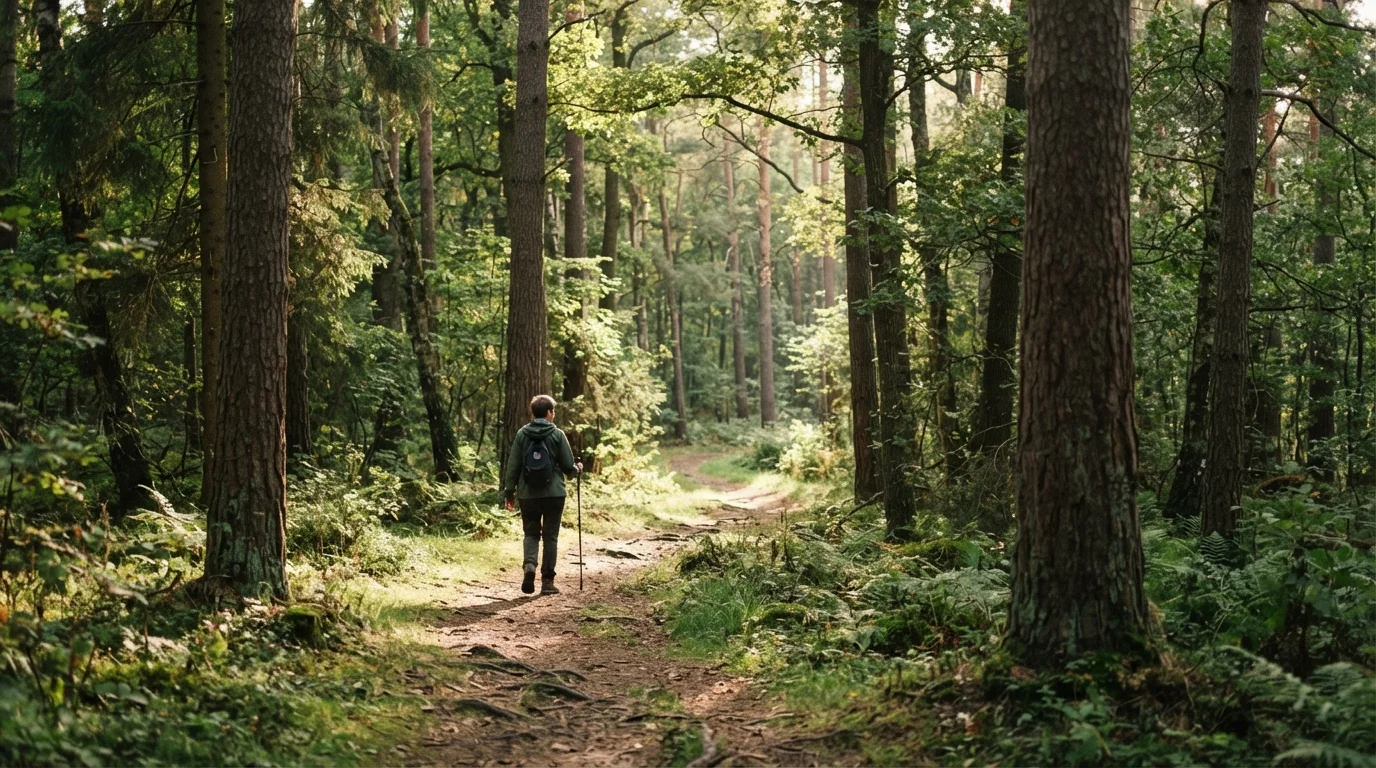
The findings point toward a few concrete habits that are both low-cost and consistent with the evidence. A 20-to-30-minute walk in a park or green corridor most days appears sufficient to capture most of the acute stress-reduction benefit. The environment does not need to be pristine wilderness: urban parks, tree-lined streets, and waterfront paths produce measurable effects in several studies.
Removing phone use during outdoor time may amplify the attention-restoration benefit, since much of the cognitive fatigue that natural settings appear to address comes from directed attention overload. This is worth testing personally even if direct experimental evidence comparing phone-free versus phone-present outdoor time is limited.
Nature exposure as one habit among several
The evidence for outdoor time is real but modest. It complements, rather than replaces, habits like physical activity, sleep consistency, and social connection. If you are managing a diagnosed mental health condition, outdoor time is not a substitute for professional treatment. Speak with a healthcare provider about what strategies are appropriate for your situation.
Outdoor exposure works best when it is one element of a wider wellness routine rather than the only one. Journaling for mental clarity and physical activity each show independent evidence bases. Combining habits with distinct mechanisms is more likely to produce cumulative benefit than relying on any single one.
This article is for general informational purposes only and does not constitute medical advice. If you are experiencing symptoms of a mental health condition, please consult a qualified healthcare professional.