

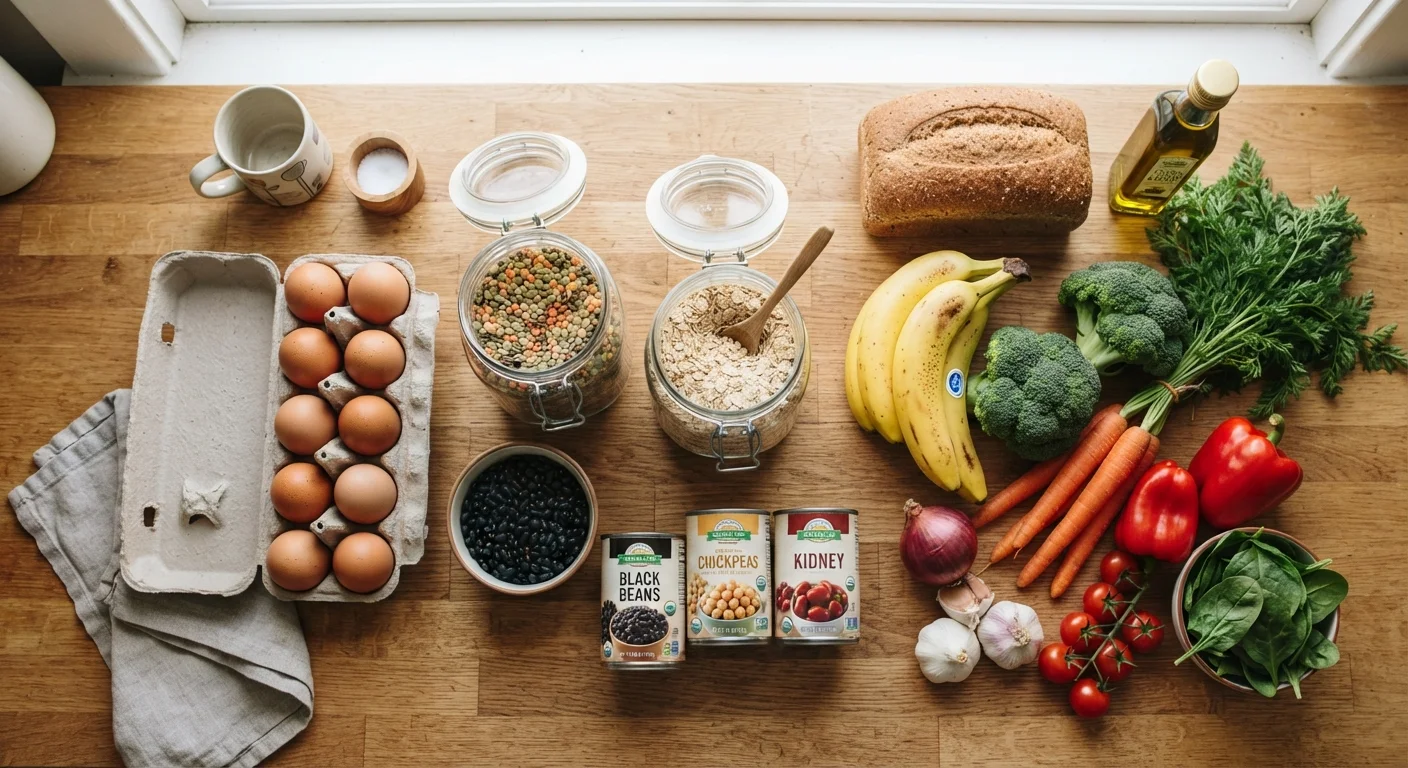
Key Takeaways
- Several of the most nutrient-dense foods available are also among the least expensive per serving.
- Protein, fiber, and micronutrients are all achievable on a tight budget when you focus on whole-food staples.
- Frozen and canned produce can match fresh in most nutritional measures, which expands affordable options.
- Planning meals around a short list of flexible ingredients reduces both cost and food waste.
- Nutrition research supports plant-forward, minimally processed diets that naturally align with lower spending.
The gap between "eating well" and "eating expensively"
A persistent belief holds that nutritious food is a premium product. The evidence does not support that framing. Diets built around legumes, whole grains, eggs, canned fish, and seasonal vegetables consistently score well on nutritional quality indices while remaining among the lowest-cost dietary patterns available. The disconnect between perceived cost and actual nutritional value shapes how many people approach grocery shopping, often in ways that work against both their health and their budget.
What nutrition science supports is not a long list of expensive superfoods. It is variety, adequate protein, fiber, and micronutrient density, all of which are achievable with a modest weekly spend when you know which staples carry the most nutritional weight. The list below focuses on foods and habits with a solid evidence base, not trends.
For a practical framework that connects these principles to your weekly shop, see the guide to grocery planning with nutritional balance in mind.
Nutritional needs vary by individual
Age, health status, activity level, and life stage all affect how much protein, iron, calcium, and other nutrients a person needs. The principles here reflect general population-level evidence. For guidance specific to your situation, a registered dietitian is the appropriate resource. For an overview of how needs shift over time, see how dietary needs shift across life stages.
Evidence-backed strategies for eating well on less
Prioritize legumes as your primary protein source
Dried or canned lentils, chickpeas, black beans, and kidney beans are among the most cost-efficient sources of protein and fiber available. A single cup of cooked lentils provides roughly 18 grams of protein, substantial iron, folate, and potassium. Research comparing dietary patterns consistently associates higher legume intake with lower cardiovascular risk markers and improved gut health outcomes.
Dried legumes cost a fraction of canned, though canned varieties (rinsed to reduce sodium) are nutritionally comparable and far more convenient. Either form fits a tight budget without nutritional compromise.
Lentils and beans deliver protein, fiber, and key micronutrients at some of the lowest costs per serving.
Treat frozen vegetables and fruit as nutritional equals to fresh
Frozen produce is harvested and frozen quickly, a process that preserves most vitamins and minerals effectively. Published comparisons of fresh versus frozen spinach, peas, broccoli, and berries show similar or, in some cases, higher nutrient retention in the frozen versions, particularly for heat-sensitive vitamins like C and folate when the fresh produce has been stored for several days.
Buying frozen allows you to stock a wider variety of vegetables year-round without the price volatility of fresh seasonal produce. It also eliminates spoilage, which is one of the more significant sources of hidden food spending.
Frozen vegetables frequently match fresh in nutrient content and cost considerably less per serving.
Rely on whole grains for sustained energy and fiber
Oats, brown rice, whole wheat bread, and barley are affordable, shelf-stable, and nutritionally far ahead of their refined counterparts. Whole grains retain the bran and germ layers, which contain fiber, B vitamins, magnesium, and various phytochemicals removed during the refining of white flour or white rice. Diets higher in whole grain intake are associated in population research with lower rates of type 2 diabetes and cardiovascular disease.
Rolled oats in particular offer exceptional value: a large container provides many weeks of high-fiber breakfasts at minimal cost per meal.
Whole grains like oats and brown rice cost little per serving while delivering fiber and B vitamins refined grains lack.
Include eggs as a nutrient-dense, affordable protein
Eggs contain complete protein (all essential amino acids), choline, vitamin D, riboflavin, selenium, and lutein. On a per-gram-of-protein basis, eggs are consistently among the cheapest animal-sourced options at retail. Despite decades of confusion around dietary cholesterol, current dietary guidance from major health bodies does not classify moderate egg consumption as a cardiovascular risk for most healthy adults, though individuals with specific conditions should discuss their intake with a clinician.
Eggs provide complete protein and a broad micronutrient profile at a low cost per serving.
Use canned fish for omega-3s without the price of fresh
Canned sardines, salmon, and mackerel are among the most affordable sources of long-chain omega-3 fatty acids (EPA and DHA), which have well-documented roles in cardiovascular and cognitive health. Canned salmon, in particular, retains its omega-3 content well and also provides calcium when the soft bones are eaten. These products keep for months, which makes them practical for meal planning without waste.
Fresh fish is nutritionally excellent but can be prohibitively expensive. Canned varieties close most of that nutritional gap at a fraction of the price.
Canned sardines and salmon deliver omega-3 fatty acids at a cost that makes regular consumption realistic.
Build meals around a short, flexible ingredient list
One of the clearest patterns in research on food budgeting and diet quality is that planning ahead reduces both spending and nutritional gaps. When meals share core ingredients (a grain, a legume or protein, and two or three vegetables), shopping becomes more predictable and leftovers work across multiple meals. This reduces the impulse purchases and waste that tend to inflate food bills quietly over time.
For a broader look at how shopping habits affect spending without improving nutrition, the article on grocery spending patterns that inflate food bills maps out specific traps to avoid.
Planning meals around shared core ingredients reduces both waste and the spending gaps that undermine budgets.
Recognize which "health foods" offer poor value for money
Specialty products marketed as superfoods, protein-enhanced snacks, or premium wellness items often carry a large price premium over conventional alternatives that are nutritionally similar or superior. Chia seeds, for example, are nutritious, but so are ground flaxseeds, which cost substantially less. Protein bars frequently deliver less protein per dollar than eggs or legumes and often include significant added sugar or artificial ingredients.
Redirecting spending from branded wellness products to whole-food staples typically improves both nutritional quality and budget outcomes simultaneously. This aligns with what broader nutrition research on dietary patterns supports: minimally processed, variety-based eating rather than isolated functional products.
Many premium wellness products offer no nutritional advantage over far cheaper whole-food staples.
This article is for general informational and educational purposes only. It is not a substitute for professional medical or dietary advice. Consult a registered dietitian or qualified healthcare provider before making significant changes to your diet, particularly if you have an existing health condition.