

Key Takeaways
- Lifestyle inflation happens when spending rises in step with, or faster than, income.
- The pattern tends to be gradual, which is why it often goes undetected for years.
- Each individual upgrade can feel justified, but the cumulative effect can stall savings progress.
- Awareness is the first practical tool: tracking spending before and after a raise is a low-effort starting point.
- Directing a portion of every income increase to savings before adjusting spending is a well-established habit for managing the pattern.
- This article provides general financial information, not personalised financial advice. Consult a licensed financial adviser for guidance specific to your situation.
Lifestyle inflation
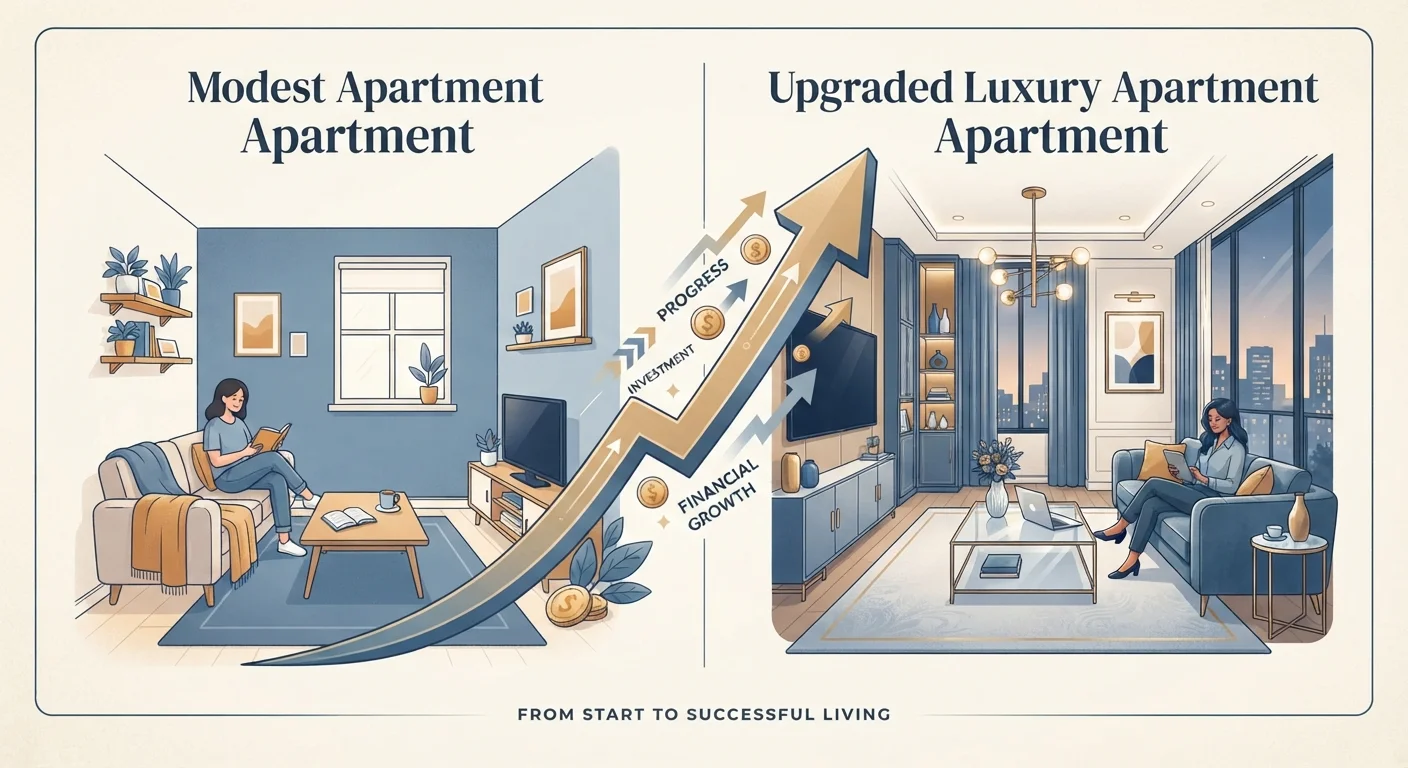
Lifestyle inflation is the tendency for spending to increase alongside income, so that a higher paycheck produces little or no gain in actual savings or financial security. When every raise gets absorbed by upgraded subscriptions, a newer car, or a larger apartment, net worth can stagnate even while gross income climbs. The pattern is common and often goes unnoticed because each individual upgrade feels reasonable on its own.
Economists sometimes call this 'hedonic adaptation' or 'lifestyle creep.' It can compound over time because higher ongoing expenses also raise the income floor needed to sustain retirement or weather job loss.
Why income growth does not automatically build wealth
A pay increase feels like forward momentum. Yet for many people, the bank balance barely moves after a few months. The reason is usually not reckless spending. It is a quieter shift: expenses expand to match the new income, and the cycle continues with the next raise.
This is lifestyle inflation in practice. The pattern is widespread partly because the US consumer economy is structured around it. Credit access, subscription services, and upgrade paths in everything from phones to housing make it easy to absorb additional income the moment it arrives.
Small daily purchases are one part of this, but the more durable problem is rising fixed costs: rent, car payments, and monthly services that increase the income floor needed to simply break even each month.
How the pattern builds over time
Lifestyle inflation tends to accelerate at predictable moments: a first professional job, a promotion, a dual-income household upgrade after a partner starts working. Each milestone brings a genuine sense that the upgrade is earned, and in many cases it is. The problem is that the upgrades often convert one-time income gains into permanent monthly obligations.
A person earning $55,000 who moves to $75,000 and increases monthly fixed costs by $1,200 has effectively neutralized most of the raise within a year. That $1,200 per month now needs to be sustained indefinitely, and it also needs to grow in retirement savings just to maintain the same standard of living later.
~63%
Americans living paycheck to paycheck
A 2023 LendingClub and PYMNTS survey found that roughly 63% of US adults reported living paycheck to paycheck, including many with six-figure incomes.
3.4%
US personal savings rate (2024 average)
The US Bureau of Economic Analysis reported the personal saving rate averaged around 3.4% in 2024, well below the post-recession highs seen in prior decades.
The compounding effect matters here. Dollars directed toward a tax-advantaged retirement account in the early years of a career have more time to grow than those added later. Lifestyle inflation in the twenties and thirties is not just a present-day budget problem.
Tracking monthly spending before and after any income change is one of the lowest-effort ways to make the pattern visible. You cannot manage what you cannot see.
Separating genuine progress from automatic upgrading
Not every post-raise expense is lifestyle inflation. Paying off high-interest debt faster, spending on reliable childcare, or finally affording a medical appointment you had deferred: these produce measurable improvements in security or wellbeing. The distinction worth drawing is between spending that builds stability and spending that raises the ongoing cost of your baseline without much lasting effect.
Hedonic adaptation, the tendency to return to a baseline level of satisfaction after a purchase, means that many lifestyle upgrades feel better in anticipation than in sustained practice. A larger apartment may feel exciting for a few months; the rent increase persists for years.
Low-effort financial habits that reduce spending friction, like automating savings transfers on payday, tend to work precisely because they remove the decision point before the money is available to spend.
Practical ways to stay aware of the pattern
Awareness does not require a complex budget overhaul. A few concrete practices can interrupt the automatic absorption of income increases.
- Review recurring fixed costs once per year. Cancel or downgrade anything no longer used regularly.
- When income increases, direct a set percentage (the exact figure depends on individual circumstances and goals) to savings before adjusting any other spending.
- Track savings rate over time, not just total dollars saved, to account for income growth.
Incremental habit changes tend to stick better than wholesale resets, and the same principle applies to financial behavior. Small, repeatable adjustments made early outperform large interventions made after years of lifestyle inflation have taken hold.
A licensed financial adviser or a certified financial planner can help you map out a savings strategy suited to your income, obligations, and timeline. General principles are a starting point, not a substitute for guidance built around your actual situation.
This article is for general informational purposes only and does not constitute personalised financial, investment, or tax advice. Consult a qualified financial adviser before making decisions about your own finances.