

Key Takeaways
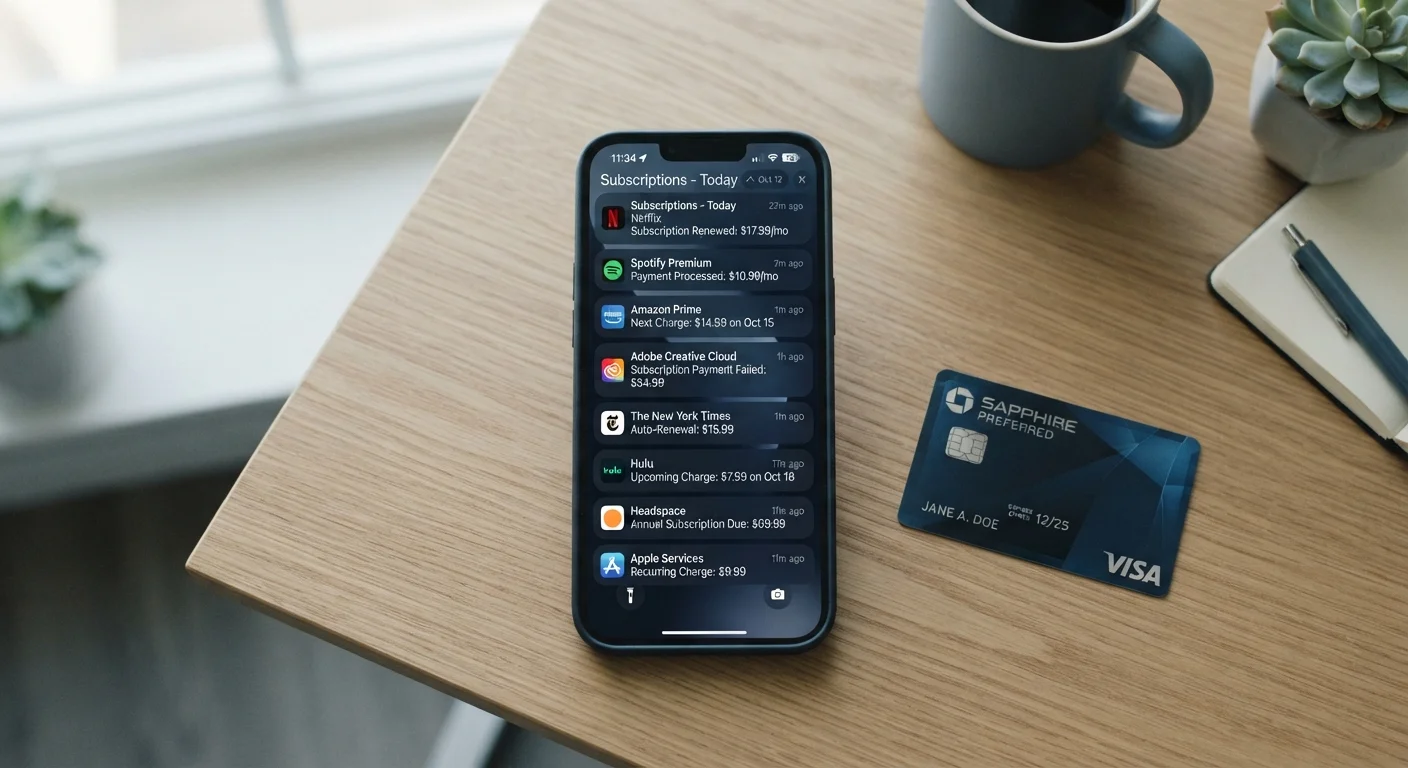
- Most households carry at least a few subscriptions they no longer actively use.
- Free trials that convert to paid plans are one of the most common sources of forgotten charges.
- Checking bank and card statements by merchant name, not category, reveals charges that apps miss.
- Annual billing cycles make subscriptions easy to forget because the charge appears only once a year.
- Cancelling unused subscriptions is straightforward, but reviewing usage before cancelling avoids regret.
Why recurring charges accumulate unnoticed
Subscription billing is designed for convenience, and that same convenience makes it easy to lose track of what you have agreed to pay. A charge of $8 or $12 rarely triggers the same attention as a one-time purchase of the same amount. Over months, a handful of those charges can add up to a meaningful monthly line item that never appears as a single, visible expense.
The effect on a monthly budget is often distorted further because subscriptions come from different billing dates, different cards, and sometimes different email addresses. No single statement shows the full picture. That fragmentation is why a deliberate audit matters more than a general sense of what you pay for.
This article is for general informational purposes only and is not personalized financial advice. Consult a qualified financial professional for guidance specific to your situation.
Common mistakes that let charges go unnoticed
Signing up for a free trial and not setting a cancellation reminder before the trial ends.
Why it happens: The sign-up moment feels low-stakes because no charge is immediate, and the reminder to cancel gets buried under other notifications.
Assuming a subscription was cancelled when you only uninstalled the app.
Why it happens: Removing an app from a phone is a natural stopping point, and many people interpret it as ending the relationship with the service.
Using a single bank or card statement review to audit all subscriptions, missing charges on other accounts.
Why it happens: Most people check the account they use most often and assume that covers their recurring charges, but subscriptions often trail old card numbers or secondary accounts.
Ignoring annual renewals because the charge appears only once and seems like a one-time cost.
Why it happens: Annual billing is easy to forget between cycles, and the charges often look unfamiliar when they reappear because the merchant name has changed or the amount has increased.
Keeping a subscription active for a household member who no longer uses it.
Why it happens: Shared accounts often persist because no single person feels responsible for the decision to cancel, and the cost feels distributed enough to ignore.
After reviewing the mistakes above, a monthly spending audit gives you a structured way to catch anything that slips through.
Where to look when you do an audit
Start with every payment method you use regularly: checking accounts, credit cards, and any digital wallets. Search each statement by merchant name rather than relying on spending categories, because subscription charges often appear under a parent company name that differs from the product name you recognize.
Check your email inbox for receipts using the words "subscription", "renewal", and "billing". Annual subscriptions in particular generate a receipt once a year that is easy to archive and forget. If you have a dedicated email address for sign-ups, search there too.
$32.84
Average monthly amount underestimated for subscriptions
According to a 2022 survey by C+R Research, US consumers underestimated their monthly subscription spending by an average of $32.84.
4 in 5
Consumers who forgot about at least one active subscription
The same C+R Research survey found that roughly four in five respondents had forgotten about at least one subscription they were still being charged for.
App store billing histories on iOS and Android list every active subscription tied to that account, including ones you may have forgotten authorizing. Many people find at least one charge there they do not recognize.
For internet and phone bills, the same pattern of layered fees applies. The breakdown of a home internet bill can include equipment rental and broadcast fees that function like subscriptions but appear under different labels.
Before you cancel: questions worth asking
Cancellation is not always the right move. Before removing a subscription, consider whether you have used it in the past 60 days, whether a lower-tier plan exists, and whether pausing is an option the provider offers. Some services allow a pause of one to three months without losing your account history or current pricing.
For bundled services, removing one component may raise the price of what you keep, so verify the math before confirming. Shared family plans present the same issue: one person cancelling can shift costs to others without warning.
The budget categories most people overlook include annual software renewals and cloud storage plans, both of which tend to appear in audits as surprises. Accounting for them in advance prevents the cycle of noticing, cancelling, and re-subscribing at a higher price.
If you are budgeting from scratch, the budgeting basics hub covers frameworks for tracking recurring costs alongside variable spending so subscriptions have a defined place in your plan.
This article is for informational purposes only and does not constitute personalized financial advice. Consult a licensed financial professional before making decisions based on your individual circumstances.