

Key Takeaways
- A high-pitched squeal often means the brake pad wear indicator is contacting the rotor.
- Grinding sounds typically signal metal-on-metal contact, which can damage rotors quickly.
- Clicking or rattling usually points to loose hardware rather than worn friction material.
- Brake noise that appears only in wet weather is often temporary and not a sign of damage.
- Any grinding or scraping sound warrants a professional inspection without delay.
- Ignoring brake noise risks escalating repair costs and reduced stopping performance.
Brake noise diagnosis
Brake noise diagnosis is the process of identifying what a specific sound from your braking system indicates about the condition of your brakes. Different noises, such as squealing, grinding, or clicking, each correspond to distinct mechanical causes. Recognizing what a sound means helps drivers decide whether a problem is minor or requires immediate attention.
Brake noise originates from friction, vibration, or contact between components that should not be touching. The pitch, duration, and conditions under which the sound occurs all help narrow down the cause.
Why brakes make noise
Brake systems work through controlled friction between the brake pad and the rotor. When something in that system is worn, loose, or contaminated, that friction changes, and the result is noise. The specific sound your brakes produce is not random: it reflects which component is involved and how far the problem has progressed.
Understanding the difference between a harmless squeak and a serious grind can save you money and protect your safety. The sections below break down each common brake sound by what it typically means.
Squealing and high-pitched squeaking
A continuous high-pitched squeal when you apply the brakes is the most common brake noise complaint. In most modern vehicles, this sound is intentional. Brake pads include a small metal tab called a wear indicator. When pad material wears down to a certain thickness, that tab contacts the spinning rotor and produces a squealing sound as a warning.
This type of squeal is a signal to schedule a brake inspection soon. The pads still have some material left, but not much. Waiting until the squeal becomes a grind means the pads have worn through completely.
A squeal that appears only in wet or cold weather and disappears after a few brake applications is usually surface rust on the rotor. This is normal and not a mechanical problem.
When to schedule an inspection versus act immediately
A squeal from wear indicators means you have time to book an appointment within the next week or two. Grinding, however, means the situation is already causing damage and the vehicle should be inspected before your next regular drive. If braking performance feels reduced, stopping distances feel longer, or the pedal feels soft, treat that as urgent regardless of the sound.
Some aftermarket brake pads are also more prone to squealing than original-equipment pads, even when new. If the noise started immediately after a brake job, the pad compound or improper lubrication of contact points may be the cause. A mechanic can verify this during a follow-up inspection.
Grinding and metal scraping sounds
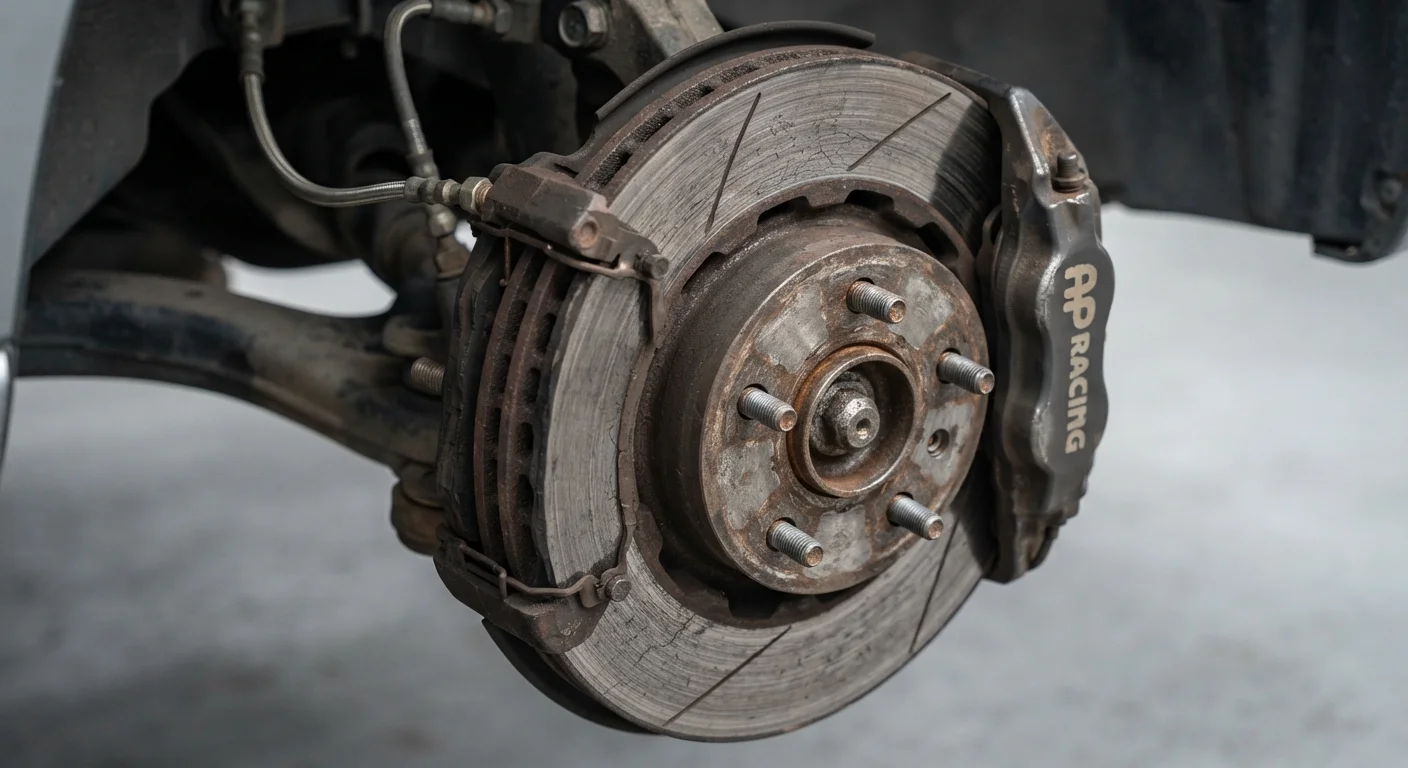
A grinding, scraping, or growling noise when braking is a more serious sign. It almost always means the brake pad friction material has worn away and the metal backing plate is now contacting the rotor directly. Metal-on-metal contact damages the rotor surface rapidly and reduces stopping power.
In some cases, grinding can also result from debris, such as a small stone or road grit, lodged between the pad and rotor. This type of grinding often resolves on its own, but if the sound persists for more than a day or two, an inspection is the right move.
Delaying repairs when grinding is present leads to rotor damage that turns a pad-replacement job into a pad-and-rotor replacement, which costs considerably more.
~$300
Average cost to replace pads and rotors (per axle)
Brake pad-only replacement typically costs significantly less; rotor damage from neglected pads adds substantially to the total repair bill.
1/4 inch
Minimum safe rotor thickness (general guideline)
Rotor manufacturers stamp a minimum thickness specification on each rotor; going below that figure compromises heat dissipation and structural integrity.
2 to 3 mm
Brake pad thickness at wear indicator contact
Most wear indicators are designed to make contact, and produce a squeal, when remaining pad material reaches approximately 2 to 3 mm, signaling the pad is near the end of its service life.
Clicking, rattling, and clunking
Clicking or rattling noises from the brake area, particularly when going over bumps or starting to move after being parked, usually point to loose hardware rather than worn friction material. Brake pads sit in a bracket called a caliper and are held in place by clips and shims. If those components loosen or wear out, the pad can shift slightly and produce a clicking or rattling sound.
A clunking sound, especially one that occurs when you first press the brake pedal, may indicate a loose caliper bolt. Calipers that are not properly secured can move during braking and create both noise and uneven braking force. This warrants prompt inspection.
Pulsating or vibrating with noise
When braking causes a rhythmic pulsation through the pedal along with a scraping or thumping noise, warped or unevenly worn rotors are often responsible. Rotors can warp from prolonged exposure to heat, particularly after repeated hard stops followed by immediate parking. The uneven surface causes the brake pad to contact high and low spots on the rotor as it spins, creating both vibration and noise.
Rotors can sometimes be resurfaced (a process called cutting or turning) if enough material remains. If the rotor is below minimum thickness, replacement is required. A mechanic can measure rotor thickness and determine which option applies.
This article provides general automotive information for educational purposes. For any brake concern, consult a qualified mechanic before driving the vehicle further in conditions where stopping performance may be compromised.